

Can Anyone Buy from a Restaurant Supply Store?
|
Time to read 8 min

Need anything else? Grab one of these to complete your purchase.

|
Time to read 8 min
Some restaurant supply stores require a business license to walk through the door. Others are open to anyone. And some wholesale suppliers skip the physical store entirely and ship directly to whoever orders.
The question comes up more than you'd expect. Home bakers who want professional-grade ingredients in quantities that make sense for their output. Caterers who are just getting started and don't yet have all their business documentation in order. Community organizations running large events who need to buy at volume without paying retail prices. The answer to whether anyone can buy from a restaurant supply store depends entirely on which type of store you're talking about.
The short version is that brick-and-mortar restaurant supply stores often have access restrictions, while online wholesale suppliers typically don't. This post covers how the different types of restaurant supply channels work, what documentation some of them require, and what your options are if you don't qualify for a particular one.
Restaurant supply stores exist to serve commercial food operations at wholesale pricing. Most of them stock products in quantities and formats designed for professional kitchens: 50-pound flour bags, gallon-sized containers, case quantities of packaged goods. The question of who can walk in and buy depends on the business model of the specific store.
Some physical restaurant supply stores operate on a membership or credential model. To shop there, you need to show proof of a commercial food business, typically a business license, a resale certificate, a tax ID, or some combination of these. The logic is that these stores are set up as business-to-business operations, and they verify that customers are legitimate commercial buyers for tax compliance and pricing reasons. Without the right documentation, you cannot shop there regardless of what you need or how much you want to spend.
Other restaurant supply stores operate with an open-door policy. No membership, no business license, no documentation required. These stores accept any customer, including home cooks, hobbyists, event planners, and small-scale operators who haven't yet formalized their business structure. The trade-off is that their pricing may not be as deeply wholesale as the credential-required stores, and their inventory may be oriented more toward the general consumer end of commercial buying.
Independent local supply stores vary widely. Some serve the general public, some serve only commercial accounts, and some have informal arrangements that depend on the specific store and region. There's no consistent policy across independent operators. Calling ahead before making the trip is worth the two minutes.
For stores that require business credentials, the typical documents are a business license issued by a state or local authority, a resale certificate or seller's permit, or an EIN. Nonprofit organizations can often qualify with their tax-exempt status documentation. Without at least one of these, credential-required stores will not allow you to shop, and they audit memberships regularly for tax compliance.
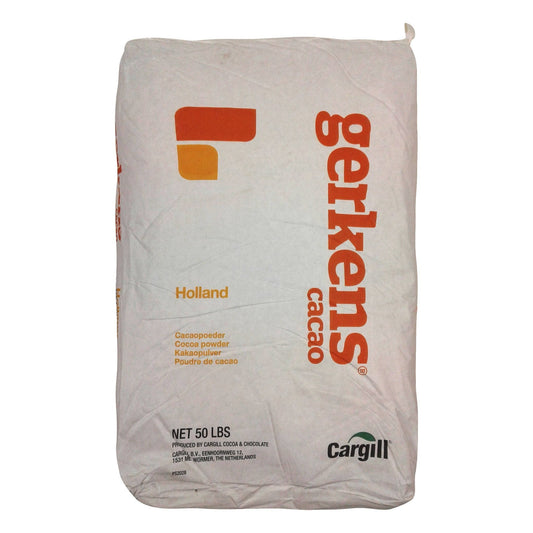
Even at stores open to the public, the purchasing experience is designed around commercial volume. Products come in quantities that a professional kitchen goes through in a week or a month. A 50-pound bag of flour, a case of gallon-sized containers, a 25-pound bag of dried cranberries: these formats represent good value per unit only if you can use the quantity before it degrades.
For home bakers who bake regularly, bulk purchasing works well on staples with long shelf lives: flour, sugar, salt, dried spices, and shelf-stable ingredients. For perishables or items with shorter shelf lives, bulk purchasing only saves money if the volume matches realistic consumption. Buying a large quantity at a lower price per unit and discarding half of it because it went stale is not a cost saving.
Storage is the other constraint. Commercial quantities require appropriate storage. A restaurant receives a pallet of flour and puts it in a dry storage room built for that purpose. A home kitchen typically doesn't have that space. This is worth thinking through before committing to bulk quantities, even when the price per unit looks attractive.
The restriction question applies mainly to physical brick-and-mortar restaurant supply stores. Online wholesale suppliers operate differently. Most of them, including Baker's Authority, don't require a business license, membership, or any documentation to place an order. You browse the catalog, add to cart, and check out. The wholesale pricing is available to anyone who orders, whether you're a commercial bakery buying 50-pound cases or a home baker ordering a 5-pound bag.
Baker's Authority has supplied both commercial kitchens and individual bakers since 1917. The catalog covers over 8,000 products across bakery ingredients, foodservice supplies, and packaging. There is no membership requirement and no minimum credential to purchase. Smaller quantities are available on many items for buyers who don't need commercial volume.
For specialty bakery ingredients in particular, an online wholesale supplier like Baker's Authority carries depth that most physical supply stores don't, including specialty flours, bulk chocolate, fruit fillings, thickeners, and decorating supplies. The foodservice supplies range covers ingredients, tools, and packaging suited to both commercial operations and serious home bakers, with next-business-day shipping on most orders.
Credential-required physical stores: Suited for established commercial food businesses with the documentation to qualify. The pricing tends to be deeply wholesale on high-volume commodity items, and in-person pickup works well for operations that need immediate stock. Not an option for home cooks, hobbyists, or new operators who haven't yet established a formal business entity.
Open-access physical stores: Accessible to anyone but the product range and pricing vary by location. Worth checking what's available in your area if you prefer in-person shopping and need items quickly. The selection may not cover specialty or bakery-specific items in depth.
Online wholesale suppliers: No access restrictions, ship directly, and typically carry more depth in specialty categories than physical supply stores. Baker's Authority carries items across bakery ingredients, foodservice supplies, and packaging that physical stores in most regions don't stock, with no membership required and no credential verification.
Warehouse clubs: Open to members without commercial credentials and carry bulk food and some equipment. The range is oriented toward the consumer end of bulk buying rather than professional bakery or foodservice, and specialty ingredients are rarely stocked. Useful for commodity pantry items but limited for anything specific to a baking program.
| Store Type | Open to Public | Notes |
|---|---|---|
| Credential-required supply store | No | Business license, resale certificate, or tax-exempt status required; audited for compliance |
| Open-access supply store | Yes | No documentation required; range and pricing vary by location |
| Independent local supply store | Varies | Policy differs by store; call ahead before visiting |
| Warehouse club | Members only | Paid membership required; consumer-oriented bulk buying, not professional foodservice |
| Online wholesale supplier | Yes | No membership or credentials required; ships directly; broader specialty range |
Regardless of which channel you use, wholesale buying in bulk quantities involves practical considerations worth thinking through before placing a large order.
Shelf life vs. usage rate: Match the quantity you buy to what you'll use within the product's shelf life. Ground spices, flour, and sugar have long shelf lives and suit bulk buying for regular users. Items with shorter windows need more careful calculation.
Storage space: Bulk quantities need appropriate storage. Dry goods need cool, dry, airtight conditions. Refrigerated and frozen items need the capacity to receive them. Ordering quantities you don't have the space to store creates its own problems.
Price per unit vs. total cost: A lower price per pound is only a saving if you use the product. Factor in realistic usage, storage conditions, and the possibility of waste before deciding that the large-format option is the better value.
Product specifications: Commercial wholesale products often come in formats optimized for professional kitchen use. For most baking staples this doesn't matter. For specialized ingredients, checking the product description before ordering avoids surprises.
On pricing assumptions: wholesale prices at restaurant supply stores are not always lower than well-priced retail alternatives, particularly when you factor in buying larger quantities than you need. The saving is real when volume matches usage. When it doesn't, the per-unit discount disappears in waste. Compare the actual cost of what you'll use, not the sticker price per pound on the largest container.
Baker's Authority offers bulk and wholesale pricing on over 8,000 products with no membership requirement and no business credentials needed to order. From specialty flours and bulk chocolate to fruit fillings, thickeners, spices, and packaging, the full catalog is available to anyone who needs professional-grade ingredients at wholesale pricing, with next-business-day shipping on most orders.