

What Percentage Chocolate Should You Use for Baking?
|
Time to read 10 min

Need anything else? Grab one of these to complete your purchase.
|
Time to read 10 min
The percentage on a chocolate label tells you how much of the bar came from a cacao bean. That number changes everything: flavor intensity, sweetness, texture, and how the chocolate behaves in the oven.
Cacao percentage is the total proportion of cacao-derived ingredients in a chocolate product. It includes cocoa solids, which are where the flavor comes from, and cocoa butter, which is the natural fat from the cacao bean that controls texture and melt. Everything after the cacao percentage is other ingredients: mostly sugar, sometimes milk solids, sometimes a small amount of lecithin or vanilla.
A 70% dark chocolate contains 70% cacao-derived ingredients and 30% other ingredients, primarily sugar. A 40% milk chocolate contains 40% cacao ingredients and 60% milk solids, sugar, and emulsifiers. That ratio is what determines whether your brownies come out fudgy and rich or flat and cloying. This guide covers what each percentage range does, which recipes call for what, and what wholesale buyers should know before ordering baking chocolate at volume.
The higher the cacao percentage, the less sugar the chocolate contains and the more intense the chocolate flavor will be. A 50% bar is mild and sweet. An 85% bar is deep, dry, and bitter to many palates. Neither is wrong. They are different tools for different jobs.
The percentage also affects how chocolate behaves physically. Cocoa butter is what gives chocolate its smooth melt and glossy finish. Chocolates with higher cocoa butter content melt more cleanly and produce a more stable result whether you are making ganache, filling a pastry, or using dark chocolate croissant sticks for laminated doughs. This is why couverture chocolate performs differently than standard baking chips even at the same cacao percentage.
What the percentage does not tell you is where the beans came from, how they were roasted, or whether the chocolate was made with any craft. Two bars at 70% can taste completely different based on bean origin, fermentation, and processing. For most everyday baking, this matters less than it does for single-origin confectionery work. But for wholesale buyers building a product around chocolate as a hero flavor, sourcing quality matters beyond the number on the label.
Cacao percentage tells you the ratio of cacao-derived ingredients to everything else. It does not tell you the quality of those ingredients, the cocoa butter content specifically, or how the beans were processed. Two chocolates at 70% can taste and behave quite differently in the oven.
Unsweetened chocolate sits at 99% to 100% cacao. It contains no sugar at all and is used in recipes that call for precise control over sweetness, typically paired with a significant amount of added sugar in the recipe itself. It produces an intensely chocolate result but requires careful formulation. It is not a substitute for dark baking chocolate in most standard recipes without adjustments.
Extra bittersweet chocolate runs from roughly 70% to 85%. This is the range for bakers who want chocolate to be the dominant, uncompromising flavor. It works well in dark chocolate ganache, chocolate-forward layer cakes, and any preparation where the recipe is built specifically around an intense cocoa profile. At this range, you may need to increase sugar or fat in recipes not written for high-percentage chocolate to avoid a dry or overly bitter result.
Bittersweet chocolate, generally 60% to 70%, is the workhorse of the professional baking kitchen. It delivers a deep, rich chocolate flavor with enough residual sweetness to work across a wide range of applications without reformulation. The FDA minimum for bittersweet chocolate is 35% chocolate liquor, but most quality baking chocolates in this category run considerably higher. A 70% bar is the most commonly recommended starting point for brownies, chocolate cakes, and ganache.
Semisweet chocolate covers roughly 50% to 60%. It is milder, sweeter, and more forgiving in recipes where chocolate plays a supporting role rather than starring. Classic chocolate chip cookies, lighter chocolate cakes, and recipes designed for a broader audience often call for semisweet. It is the most familiar profile for most consumers.
Milk chocolate typically runs 30% to 42% cacao. The remaining content is milk solids, sugar, and emulsifiers, which produce the creamy, sweet, mellow flavor most associated with everyday chocolate. In baking, milk chocolate works in recipes specifically written for it. Substituting it for dark chocolate without adjusting sugar and fat usually produces an unbalanced result.
The 60% to 70% range earns its reputation as the best all-purpose baking chocolate because it performs consistently across the widest range of recipes without requiring reformulation. It has enough sugar to round out the flavor and enough cocoa intensity to taste like real chocolate once baked. Most professional recipes are written with this range in mind.
Above 70%, the rules change. Recipes not specifically written for high-percentage chocolate may come out drier or more bitter than intended because there is less sugar and more dry cocoa solids absorbing moisture from the batter. Products like bittersweet chocolate croissant sticks are formulated for specific applications where that intensity is the point. If you're using a high-percentage bar in a recipe written for 70%, add a small amount of additional fat or sugar to compensate.
Couverture chocolate contains a higher percentage of cocoa butter than standard baking chocolate, which is what makes it the professional standard for ganache, dipping, enrobing, and any application where a smooth melt and clean set matter. The cocoa butter content produces a fluid consistency when melted, a glossy finish when set, and a satisfying snap at room temperature.
Standard baking chocolate, including most chips and commercial baking bars, often contains less cocoa butter and more stabilizers like lecithin, which help chips hold their shape in a cookie but produce a thicker, less fluid melt for confectionery work. For folding into brownie batter or cake batter, standard baking chocolate performs perfectly well. For tempering, dipping, or making confections where the finish matters, couverture is worth the cost difference.
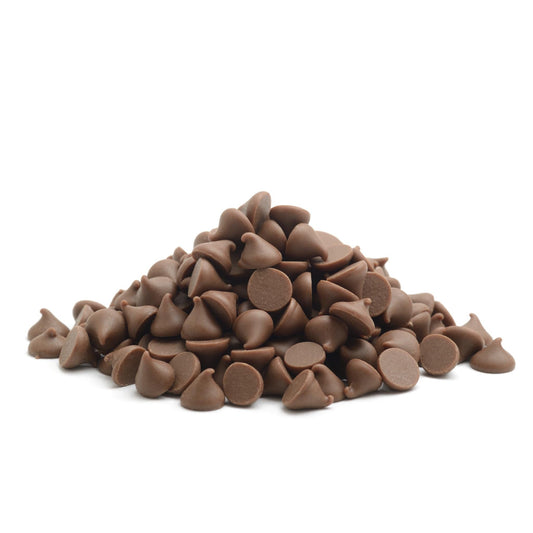
Chocolate chips are formulated to hold their shape in a baked good. They contain less cocoa butter and more stabilizers than baking bars. If you're melting chocolate for ganache, dipping, or tempering, use a baking bar or couverture. Chips will melt, but the result will be thicker and less smooth.
Chocolate above 70% to 80% contains more dry cocoa solids relative to sugar and fat. In a recipe written for 60% to 70% chocolate, swapping in a higher percentage bar without adjusting the other ingredients can produce a drier crumb, a more bitter flavor, and a denser texture than intended.
The fix is straightforward. For every ounce of chocolate above roughly 75%, consider adding a small amount of additional sugar or a small amount of butter or oil to maintain the moisture balance. The adjustment is minor but makes a meaningful difference in the finished product. Recipes written specifically for high-percentage chocolate already account for this, so no adjustment is needed when the recipe and the chocolate match.
When ordering baking chocolate in volume, document the exact percentage and brand in your formulation records. Switching suppliers or percentages mid-production without adjusting the recipe can shift flavor, texture, and finished weight in ways that affect product consistency. Confirm the cacao percentage on every reorder.
| Application | Recommended Range | Notes |
|---|---|---|
| Brownies | 60% to 70% | Best balance of fudgy texture and deep flavor |
| Chocolate cake | 60% to 70% | 70% produces the most pronounced chocolate flavor |
| Chocolate chip cookies | 50% to 60% | Semisweet is the classic choice; balances sweet dough |
| Ganache and truffles | 60% to 70% couverture | Higher cocoa butter content gives smoother, more stable result |
| Dark chocolate ganache | 70% to 80% | Intense flavor; pairs well with cream-heavy bases |
| Dipping and enrobing | Couverture at any % | Cocoa butter content matters more than percentage here |
| Recipes calling for milk chocolate | 38% to 42% | Do not substitute dark; sugar and fat balance will be off |
| Very high intensity applications | 80% to 85% | Adjust added sugar and fat; recipe must be written for this range |
The percentage on the label is a starting point, not a verdict. Knowing what each range does, and how chocolate behaves in the oven, makes every recipe easier to get right the first time.