
BUTTERY CROISSANT
Rated 5.0 stars by 1 users
Category
DESSERT
Author:
Zalmy Lipszyc
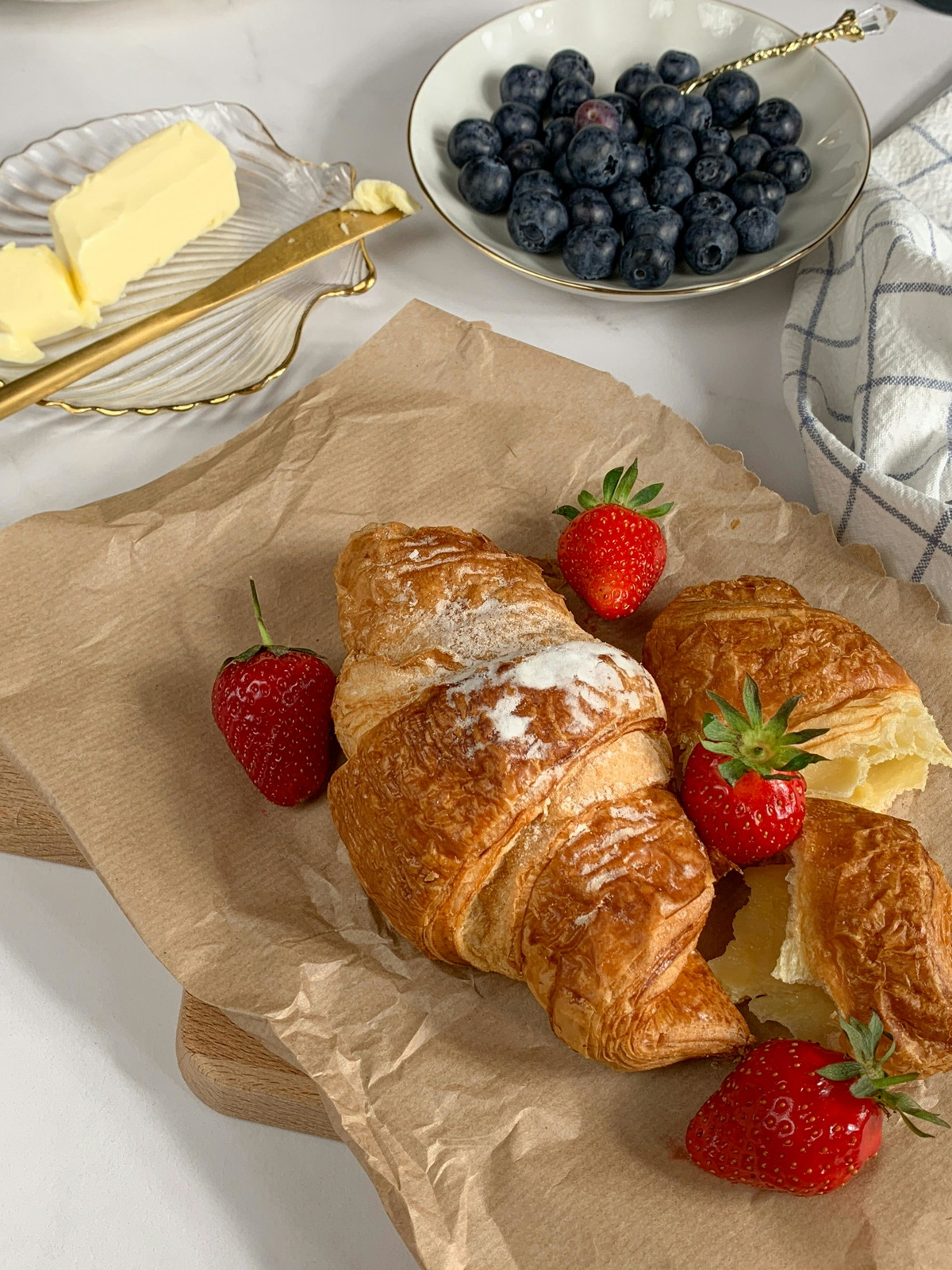
A rich and flaky buttery croissant recipe made with laminated dough, cold butter, and instant yeast for bakery-style layers. These croissants bake up golden brown with crisp outer layers and a soft airy center, perfect for breakfast, brunch, or serving alongside coffee and fresh fruit.
Ingredients
-
4 cups all-purpose flour
-
¼ cup granulated sugar
-
2¼ teaspoons instant yeast
-
1½ teaspoons salt
-
1¼ cups cold whole milk
-
2 tablespoons Pepe Saya Butter Sheets Square Unsalted
-
1 cup cold unsalted butter, for laminating
-
1 egg
-
1 tablespoon milk, for egg wash
Directions
In a large mixing bowl, combine the flour, granulated sugar, instant yeast, and salt.
Add the cold whole milk and butter. Mix until a rough dough forms.
Knead the dough until smooth, then cover and refrigerate for at least 1 hour.
Roll the dough into a large rectangle and place the cold butter in the center for laminating.
Fold the dough over the butter completely and roll into a long rectangle.
Fold the dough into thirds like a letter, then refrigerate for 30 minutes.
Repeat the rolling and folding process 2 more times to create flaky layers.
Roll the dough out and cut into triangles.
Starting from the wide end, roll each triangle tightly toward the tip to form croissants.
Place the croissants on a parchment-lined baking sheet and allow them to proof until puffy.
Whisk together the egg and milk to create the egg wash, then brush over each croissant.
Bake at 400°F until golden brown and flaky.
Allow croissants to cool slightly before serving.
Recipe Note
Recipe Note
For extra richness and better lamination, keep the butter and dough cold throughout the folding process. Croissants can also be filled with chocolate, jam, almond paste, or savory fillings before rolling.
Nutrition Facts: 1 croissant contains approximately 260 calories, 5 g protein, 27 g carbohydrates, 15 g fat, 8 g saturated fat, 55 mg cholesterol, 230 mg sodium, and 1 g fiber.
To Plate the Croissants Beautifully, You’ll Need:
A light-colored linen napkin
A wooden surface
A pretty serving plate
Strawberries or raspberries
Chocolate pieces or small bowls of jam
Powdered sugar for dusting
A small gold spoon (optional)
A cup of coffee or a glass jar of honey (optional)
Here are the step-by-step instructions:
Prepare the Surface: Lay a light-colored linen napkin on a wooden surface and place a pretty serving plate in the center.
Create the Center: Place 2-3 croissants in the middle of the plate, slightly overlapping.
Form the Arrangement: Add the remaining croissants around the center, layering them softly for a full bakery-style look.
Add Sweet Accents: Place a few strawberries, raspberries, chocolate pieces, or small bowls of jam around the croissants.
Add the Final Flourish: Lightly dust the croissants with powdered sugar for a sweet finished look.
Complete the Scene (Optional): Add a small gold spoon, a cup of coffee, or a glass jar of honey in the background.
Enjoy your beautiful and delicious buttery croissants.
How to Shape the Croissants
To create evenly shaped croissants with flaky layers and a classic crescent appearance, proper rolling technique is important.
The Triangle Roll Method
Roll: Roll the dough into a large rectangle about ¼-inch thick.
Cut: Slice the dough into long triangles using a sharp knife or pastry cutter.
Stretch: Gently stretch each triangle slightly to lengthen the shape.
Roll: Starting from the wide end, roll tightly toward the pointed tip.
Curve: Bend the ends inward slightly to create the traditional croissant shape.
Why You’ll Love These Buttery Croissants
These buttery croissants have crisp flaky layers with a soft airy interior and rich buttery flavor. The laminated dough creates a light texture that pairs perfectly with coffee, jam, fresh fruit, or chocolate for an easy bakery-style breakfast at home.
Tips for Perfect Croissants
Keep the butter cold during the laminating process.
Refrigerate the dough between folds to maintain distinct layers.
Avoid over-flouring the dough while rolling.
Allow enough proofing time for light and airy croissants.
Brush evenly with egg wash for a glossy golden finish.
Frequently Asked Questions
Why are my croissants leaking butter while baking?
Butter leakage usually happens when the dough becomes too warm during lamination. Chilling the dough between folds helps maintain the layers.
Why are my croissants dense instead of flaky?
Dense croissants are often under-proofed or rolled too tightly. Allow enough time for the dough to become puffy before baking.
Can I freeze croissant dough?
Yes, croissant dough can be frozen after shaping. Allow the dough to thaw and proof before baking.
How do I get more defined flaky layers?
Using cold butter and keeping the dough chilled throughout the laminating process helps create more visible flaky layers.
Can I add fillings to these croissants?
Yes, croissants can be filled with chocolate, jam, almond paste, ham, or cheese before rolling.
Why are my croissants pale after baking?
Croissants may need additional baking time or a more even coating of egg wash for deeper golden color.
Can I prepare croissants overnight?
Yes, shaped croissants can be refrigerated overnight and baked fresh the next morning.
What butter works best for croissants?
High-fat European-style butter works best because it creates richer flavor and better flaky layers.