



Nutrin
Light Roast Peanut Flour 14M
Light Roast Peanut Flour 14M
Nutrin Light Roast Peanut Flour is a partially defatted peanut powder at 14% fat, sold in bulk 50 lb. bags for wholesale bakery and manufacturing use. It carries real roasted peanut character in a dry, free flowing form, which is what makes it workable in formulations where whole or granulated peanuts would be the wrong texture.
Peanut flour earns its place in a formula two ways at once, as a flavor ingredient and as a protein contributor. Nutrin peanut flour runs relatively high in protein, up to around 50%, so it lifts the protein content of a product while it is doing flavor work. The bulk 50 lb bag is the format for operations building this into regular production rather than testing a small batch.
How Nutrin Peanut Flour Is Made
The process starts with whole peanuts and works down to a powder in defined stages.
- Peanuts are shelled
- They are electronically sorted
- They are roasted, with the degree of roast set during processing
- They are mechanically pressed to remove a portion of the oil
- The pressed material is ground to a specific particle size
Mechanical pressing is the step that separates peanut flour from peanut butter. Taking a portion of the oil out is what lets the ground peanut behave as a dry powder rather than a paste.
What Partially Defatted at 14% Means
Partially defatted means some of the natural peanut oil has been pressed out, not all of it. At 14% fat, enough oil remains to carry roasted peanut flavor, while the reduction is what gives the flour its powdered handling.
That middle position matters in formulation work. A fully defatted flour goes further toward pure protein and away from flavor, while a higher fat flour brings more richness and behaves differently in a dry blend.
Roast Level and Flavor
Roast level is set during processing and is the main lever on how loudly the peanut flavor reads in a finished product. A lighter roast sits at the gentler end of that range, which suits formulas where peanut should be present without taking over the profile.
Culinary and Formulation Uses
Peanut flour goes into human and pet food applications where granular peanut pieces are not wanted and a liquid peanut flavor is not practical.
- Breads, cookies, and other baked goods
- Confections and fillings
- Sauces, where it also contributes body
- Dry blends and protein fortified formulations
Because it arrives as a powder, it folds into a dry mix without the separate handling that nut pieces or nut butters require on a production line.
Bulk, Quantity, and Packaging Options
This item ships as a single bulk 50 lb. bag, the wholesale format for production volume. Wholesale quantity pricing is available for high volume accounts.
Allergen Information
Contains peanuts.
Product Identifier
Item Number: D-1196
Key Takeaways
- Nutrin light roast peanut flour, partially defatted to 14% fat, in a bulk 50 lb bag
- Made from shelled, electronically sorted, roasted peanuts, mechanically pressed and ground to a specific particle size
- Relatively high in protein, up to around 50%
- Dry, free flowing powder rather than a paste
- Used in baked goods, confections, sauces, and dry blends
- Contains peanuts, and wholesale quantity pricing is available
Couldn't load pickup availability

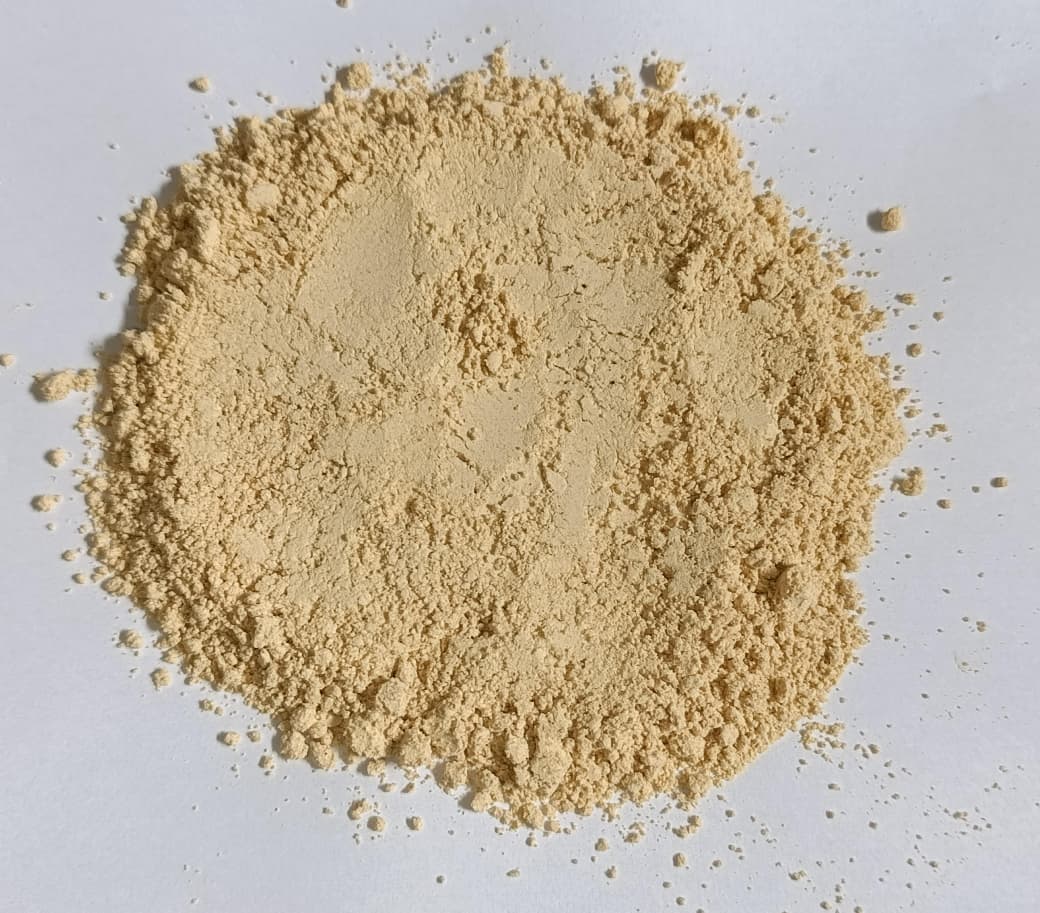
Nutrin Light Roast Peanut Flour is a partially defatted peanut powder at 14% fat, sold in bulk 50 lb. bags for wholesale bakery and manufacturing use. It carries real roasted peanut character in a dry, free flowing form, which is what makes it workable in formulations where whole or granulated peanuts would be the wrong texture.
Peanut flour earns its place in a formula two ways at once, as a flavor ingredient and as a protein contributor. Nutrin peanut flour runs relatively high in protein, up to around 50%, so it lifts the protein content of a product while it is doing flavor work. The bulk 50 lb bag is the format for operations building this into regular production rather than testing a small batch.
How Nutrin Peanut Flour Is Made
The process starts with whole peanuts and works down to a powder in defined stages.
- Peanuts are shelled
- They are electronically sorted
- They are roasted, with the degree of roast set during processing
- They are mechanically pressed to remove a portion of the oil
- The pressed material is ground to a specific particle size
Mechanical pressing is the step that separates peanut flour from peanut butter. Taking a portion of the oil out is what lets the ground peanut behave as a dry powder rather than a paste.
What Partially Defatted at 14% Means
Partially defatted means some of the natural peanut oil has been pressed out, not all of it. At 14% fat, enough oil remains to carry roasted peanut flavor, while the reduction is what gives the flour its powdered handling.
That middle position matters in formulation work. A fully defatted flour goes further toward pure protein and away from flavor, while a higher fat flour brings more richness and behaves differently in a dry blend.
Roast Level and Flavor
Roast level is set during processing and is the main lever on how loudly the peanut flavor reads in a finished product. A lighter roast sits at the gentler end of that range, which suits formulas where peanut should be present without taking over the profile.
Culinary and Formulation Uses
Peanut flour goes into human and pet food applications where granular peanut pieces are not wanted and a liquid peanut flavor is not practical.
- Breads, cookies, and other baked goods
- Confections and fillings
- Sauces, where it also contributes body
- Dry blends and protein fortified formulations
Because it arrives as a powder, it folds into a dry mix without the separate handling that nut pieces or nut butters require on a production line.
Bulk, Quantity, and Packaging Options
This item ships as a single bulk 50 lb. bag, the wholesale format for production volume. Wholesale quantity pricing is available for high volume accounts.
Allergen Information
Contains peanuts.
Product Identifier
Item Number: D-1196
Key Takeaways
- Nutrin light roast peanut flour, partially defatted to 14% fat, in a bulk 50 lb bag
- Made from shelled, electronically sorted, roasted peanuts, mechanically pressed and ground to a specific particle size
- Relatively high in protein, up to around 50%
- Dry, free flowing powder rather than a paste
- Used in baked goods, confections, sauces, and dry blends
- Contains peanuts, and wholesale quantity pricing is available